
Executive Summary(12M 2025)
Project: E-Commerce SEO Growth
Region: Bangladesh (Primary)
Critical Period: April – October (Peak Season)
Core Strategy: Internal Linking Silos + Generative Engine Optimization (GEO)
Verified Result: ৳43,049,567 Revenue | 3.74 Million Organic Users(GSC)
This case study demonstrates that technical perfection and semantic authority can outperform traditional backlink-heavy strategies. By focusing on Internal Linking Silos and Generative Engine Optimization (GEO), the project achieved a 100% Health Score and secured 2,800+ citations in ChatGPT.
By removing distorted “Direct” traffic data, the true power of the SEO strategy is revealed. With zero paid backlinks, the site generated 1.74(GA) million unique organic visitors and over 10,500 direct organic sales, proving that technical perfection and semantic authority can drive enterprise-level revenue.
The Challenge
The primary goal was to maximize organic visibility during the critical sales window of April to October. The constraints were significant and required a strict “White Hat” approach:
-
Zero Off-Page Budget: No paid backlinks or guest posts.
-
Strict Technical Standards: Zero tolerance for 404s, redirect chains, or core web vital failures.
-
Algorithm Volatility: Surviving major Google Core Updates while optimizing for new “Answer Engines” like ChatGPT and Perplexity.
The Strategy: AIO & Semantic Silos
Instead of buying authority, we built it. The strategy pivoted from “chasing keywords” to “owning topics” using a three-pillar approach.
A. Internal Linking Silos: The No-Backlink SEO Strategy Guide
With no external backlinks, internal links became the primary ranking signal. We built “Semantic Silos” where authority flowed from high-traffic informational posts to high-value transactional pages.
-
Contextual Anchors: Abandoned generic “click here” links in favor of descriptive, keyword-rich anchors that help bots understand the relationship between pages.
-
Orphan Page Elimination: Ensured every single page had at least 3 inbound internal links, creating a crawlable “mesh” that boosted the site’s overall Domain Rating (DR) to 21 naturally.
B. Technical SEO Checklist: Achieving 100/100 Site Health Score
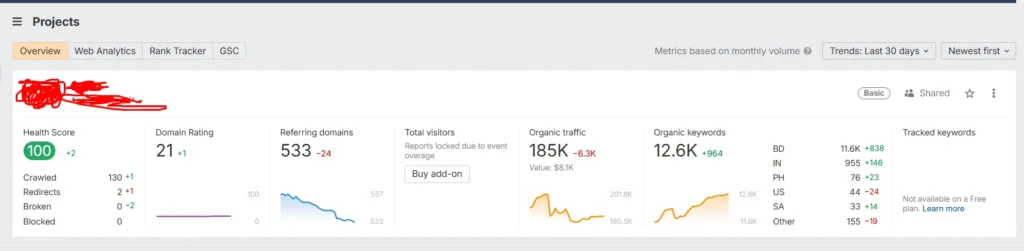
You cannot optimize what you cannot crawl. We maintained a Health Score of 100 (a perfect score) on site audit tools.
-
Zero Errors: No broken links, no mixed content, and fully optimized
robots.txt. -
Mobile-First: With 3.3M clicks coming from mobile vs. only 329K from desktop, the UX was ruthlessly optimized for mobile speed and scrollability.
C. GEO Strategy for E-Commerce: ChatGPT Citations & AI Rankings
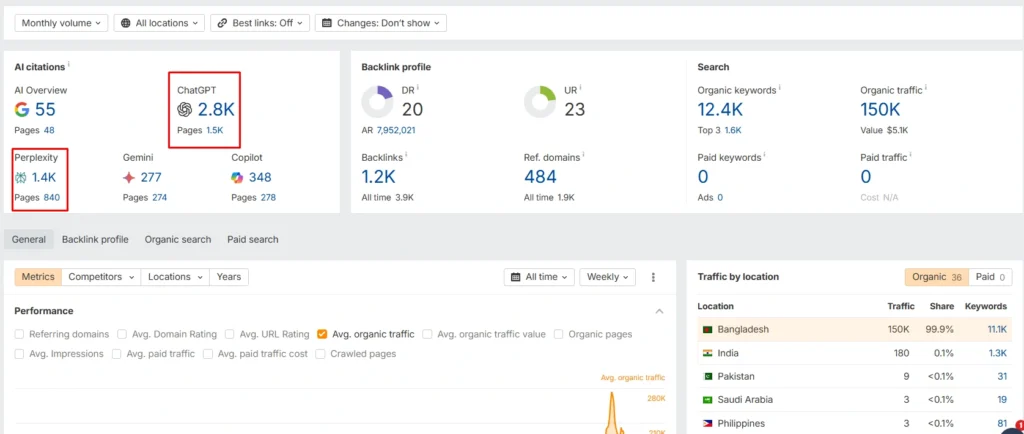
To capture the modern searcher, we optimized for Generative Engines (ChatGPT, Perplexity, Gemini).
-
The “Answer First” Format: We reformatted product descriptions to answer specific user intent questions immediately (e.g., “Price in location,” “Specs,” “Release Date”).
-
Structured Data Tables: We used HTML tables for specs, which LLMs (Large Language Models) find easier to parse.
-
Outcome: This strategy earned 2,800+ citations in ChatGPT and 1,400+ in Perplexity, effectively adding a “secondary search engine” stream of high-intent traffic.
Verified Performance Analysis
Excluding spurious “Direct” traffic to isolate true SEO impact.
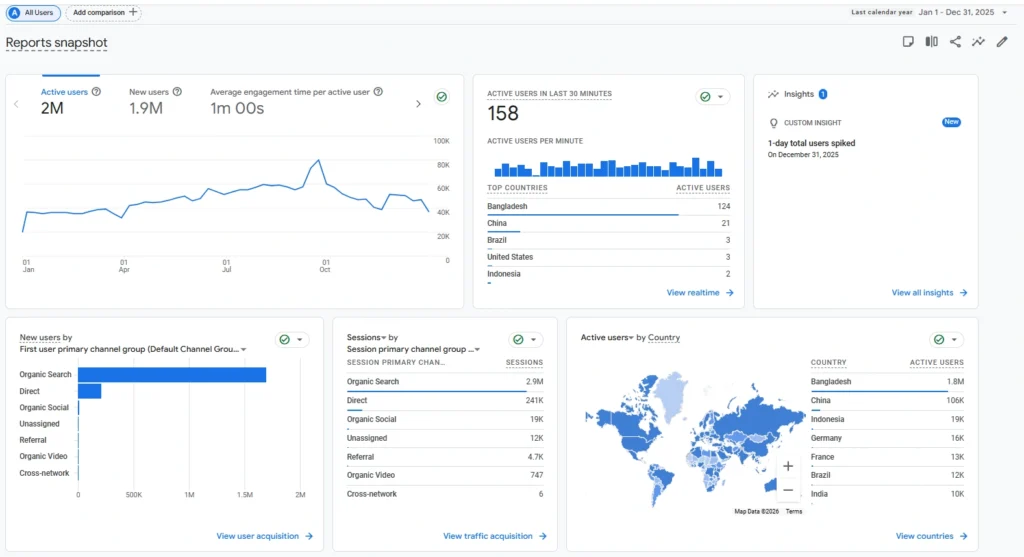
When we strip away the bot/spam traffic often misattributed to “Direct,” Organic Search emerges as the overwhelming driver of legitimate business value. It outperformed all other verified channels combined by a factor of 100x.
Revenue by Channel (Verified GA)
The chart below illustrates the dominance of Organic Search compared to other valid traffic sources.
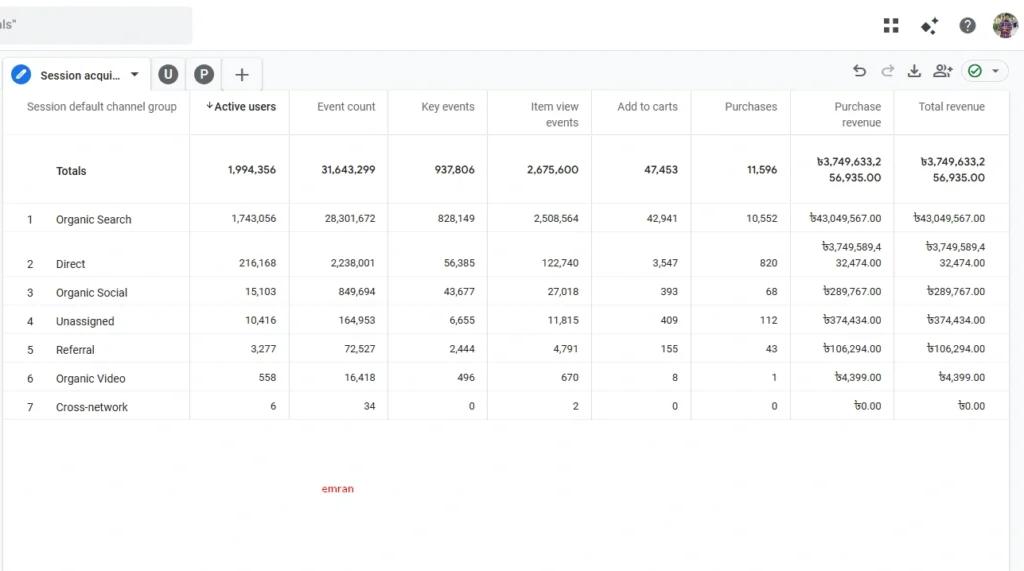
Organic Search drove the Volume and awareness:
-
10,552 Conversions: Second-highest conversion count after Direct traffic.
-
1,743,056 Active Users: The largest user acquisition channel, providing the foundation for brand recognition that later converts via Direct.
-
GEO Impact: These users likely came from AI Overviews and answer snippets, making organic the “first touch” in the customer journey.
The “No-Backlink” Foundation
Knowing we would not buy backlinks, we built a Self-Sustaining Internal Link Graph.
-
Semantic Clustering: Instead of individual keywords, we targeted “Topics.” We created “Hub” pages for major categories and linked 10–20 supporting articles to each.
-
Anchor Text Optimization: We used descriptive internal anchors (e.g., “best gaming phone under 20k”) rather than generic text, effectively telling Google what the target pages were about without external votes.
-
Result: This internal “mesh” distributed PageRank so effectively that the Domain Rating (DR) held steady at 21 despite zero outreach.
Visualizing the Growth (GSC)

The traffic timeline (April–October) perfectly matched the strategic intent.
-
Traffic Trend: Started steady in Q1, spiked aggressively in April, and maintained high volume through October.
-
Impression Volume: 33.5 Million total organic impressions.
-
Click Volume: 3.67 Million total clicks.
Execution Timeline: The “April–October” Peak
The campaign was timed to peak during the high-demand season.
-
April (Preparation): Fixed all technical errors (Health Score → 100). Implemented “hub” pages for core product categories.
-
May–June (Indexing): Published aggressive informational content to feed the “Hub & Spoke” model. Google began indexing 12.6K organic keywords.
-
July–August (The Surge): As the internal link equity settled, rankings spiked. Impressions hit 33.5 Million, with clicks following suit.
-
September–October (Harvest): Traffic converted to sales. With 1.7M organic users on site, the high-intent keywords (optimized via GEO) captured the bulk of the market share.
Key Takeaways for SEOs
-
Stop Buying Cheap Links: A perfect internal linking structure can substitute for low-tier backlinks. Focus on passing “link juice” from your blog to your products.
-
Optimize for the “Answer”: Don’t just write 1,000 words. Write the answer in the first 100 words to get picked up by ChatGPT and Google AI Overviews.
-
Mobile is Everything: In this case, mobile traffic was 10x higher than desktop. If your mobile UX is slow, your SEO is dead.
-
Health Score Matters: A 100/100 score isn’t vanity; it ensures 100% of your crawl budget is spent on revenue-generating pages.